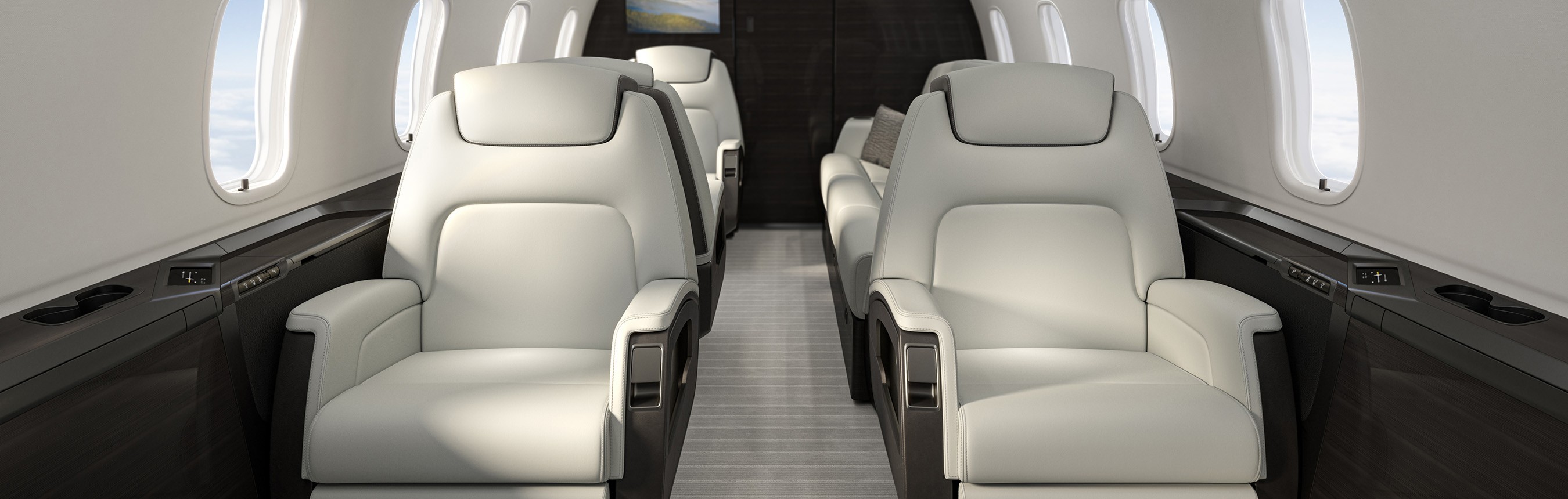

You demanded excellence, so we designed an aircraft with a no-compromise approach that continues to define the super mid-size category. That’s why the award-winning Challenger 350 aircraft is the best-selling business jet among top corporate flight departments and charter operators worldwide.
Smooth ride
An optimally balanced aircraft design provides you with an exceptionally smooth ride from takeoff to touchdown.
#1 in deliveries
The Challenger 350 aircraft is the best-selling business jet among top corporate flight departments and charter operators worldwide.
Largest cabin
Sit back and relax in the largest cabin in its class. Featuring exquisite finishes and sleek styling, a flat floor design and safe access to baggage at all times, it delivers high style and comfort without compromise.
Quietest cabin
Minimize noise to maximize comfort in the quietest cabin in its class. Equipped with a standard entry door acoustic curtain and galley pocket door, the aircraft's sound suppressing design ensures optimal productivity and relaxation in-flight.
Lowest direct operating costs
Through longer maintenance intervals, low parts cost and increased efficiency, operators benefit from the lowest in-class operating costs making the Challenger 350 aircraft a wise decision.
Highest reliability
With its outstanding dispatch reliability, the Challenger 350 aircraft was designed to deliver peace of mind.
Challenger 350

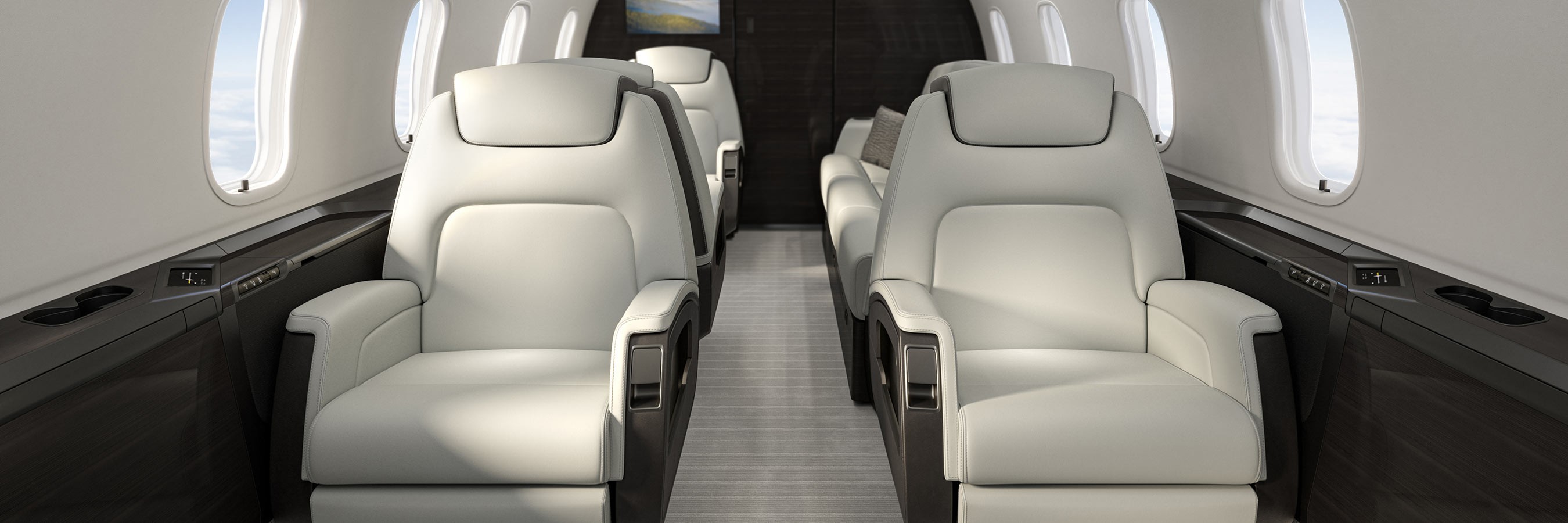
World class design
From our signature metal trim to clever foldout tables, every aspect of the cabin has been carefully designed for an unrivalled private jet experience. Whether it's for work or pleasure, the Challenger 350 aircraft delivers on its promise of class-leading comfort.
Always connected
Enjoy available high-speed Ka-band* and 4G ATG (air-to-ground)** internet on the Challenger 350 aircraft. Stream your favourite music or movies, video conference or watch the big game. For work or play – you’re always connected.
Control at your fingertips
Seamlessly switch from information to entertainment with the Challenger 350 aircraft's refreshed cabin management system. Inspired by the industry flagship Global 7500 aircraft, its modern and user-friendly design allows you to intuitively connect to all of your devices.
The details you expect and some you don’t
Exceptional craftsmanship, carefully selected finishes, large windows and angled touch screens create the perfect balance between aesthetics and ergonomics.
Quietest Cabin
With its superior sound suppressing design, which includes a standard entry door acoustic curtain and galley pocket door, the Challenger 350 aircraft features the quietest cabin in its class.

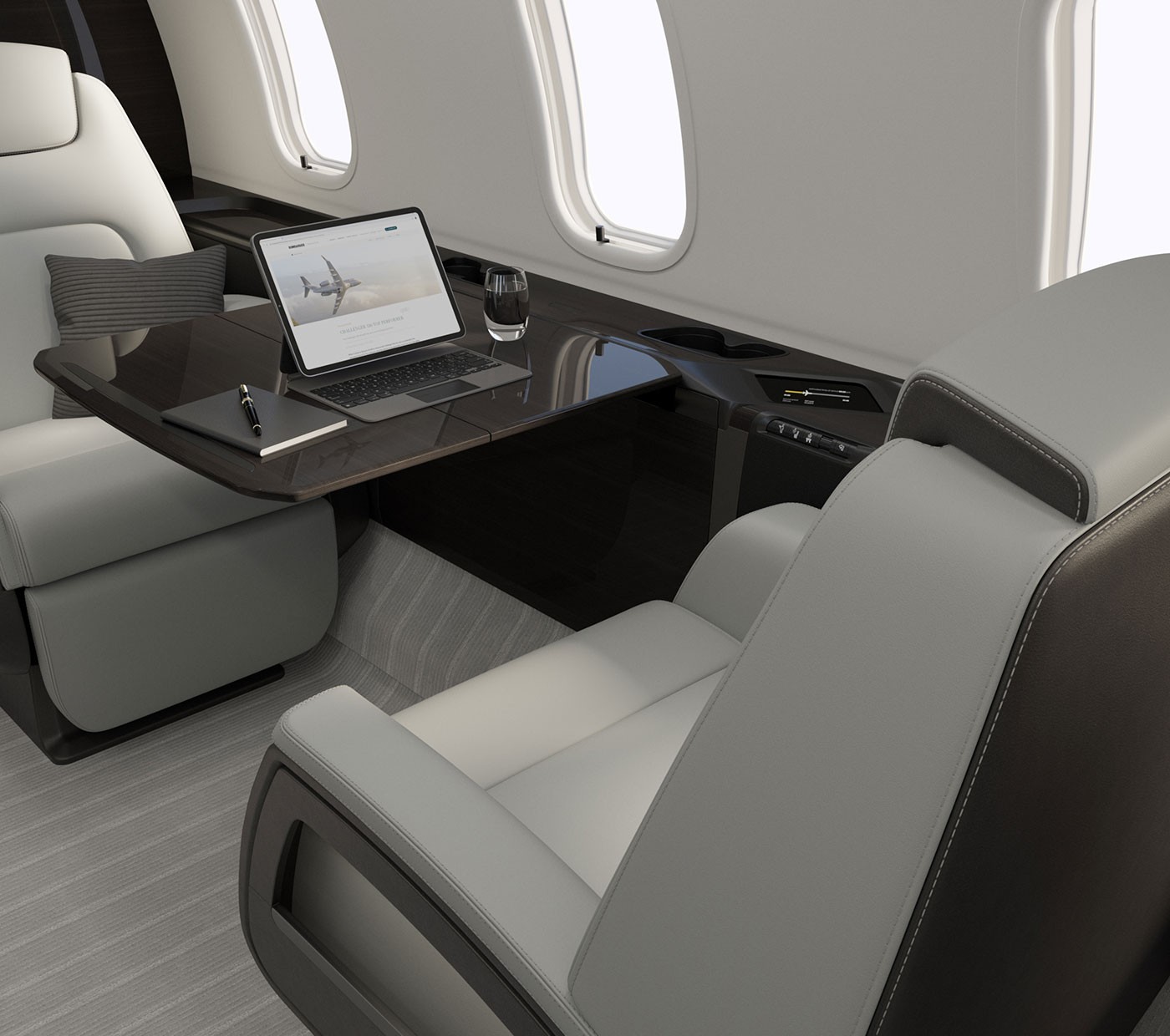
Productivity is always in Style
Carefully selected finishes and a functional cabin design deliver class-leading comfort, increased productivity and an unrivalled private jet experience.
Immersive sound
Enjoy an unparalleled audio experience with crystal-clear sound through integrated sidewall speakers – exclusive to its class.
Unlimited access
Safely access what you require, as required. With access to the baggage compartment at all times, your personal items are always within reach.

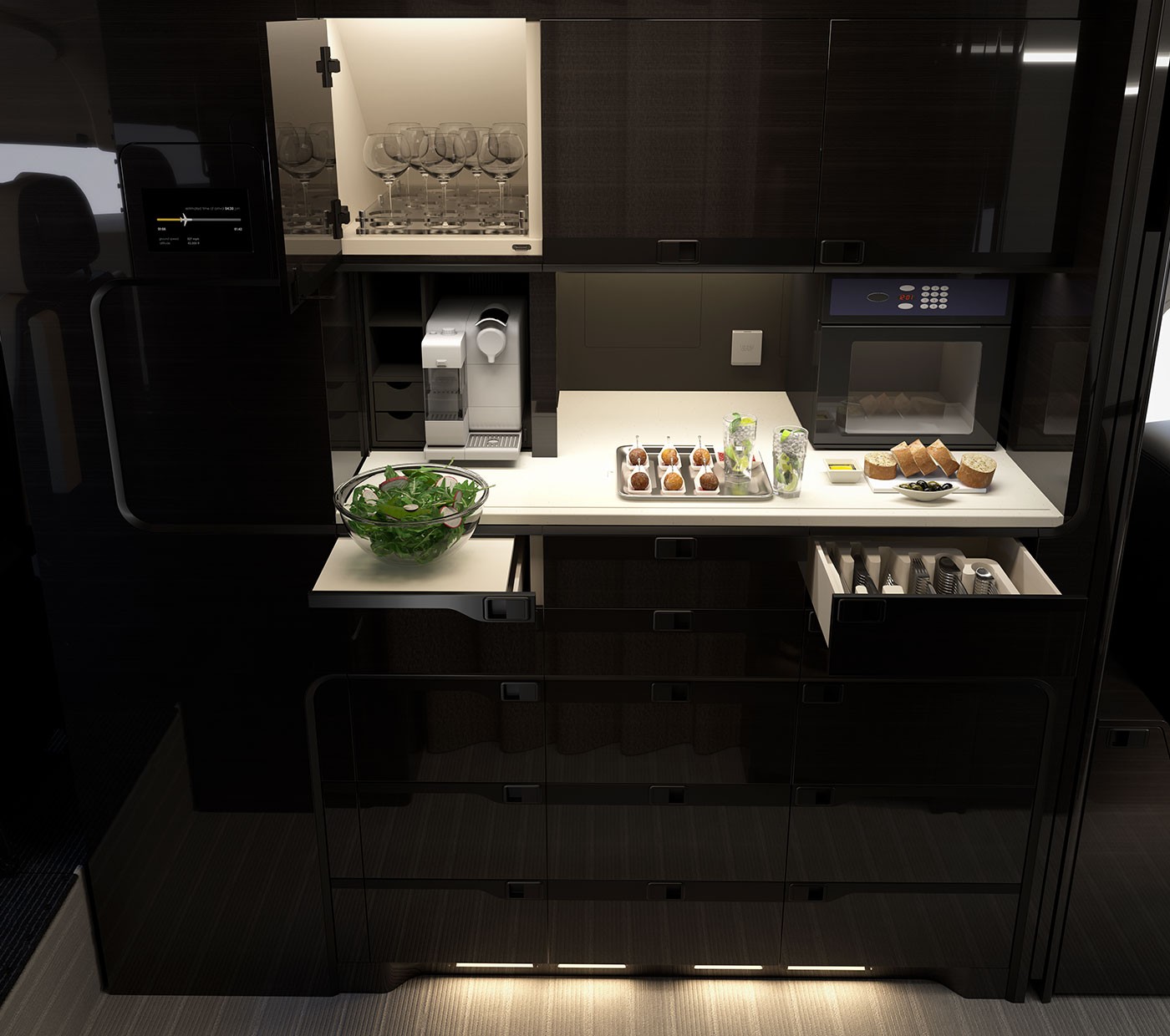
The best inflight meals start with a great galley
Whether it’s a business lunch, dinner or morning coffee, the Challenger 350 aircraft’s well-appointed galley is both beautiful and functional. It offers extraordinary storage space, high-quality cooking amenities, and a large contemporary countertop with plenty of space to prepare meals.
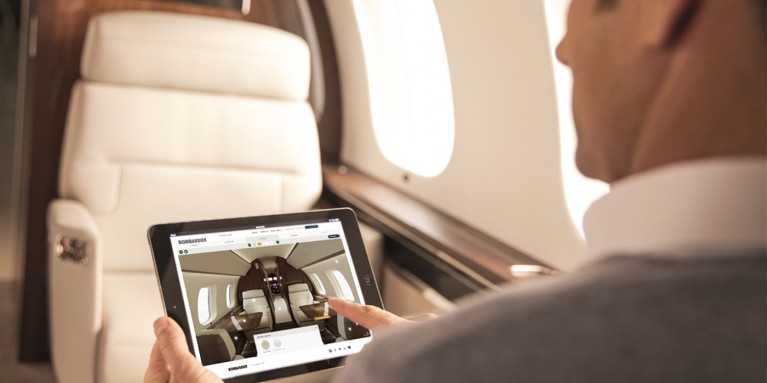
Select the floorplan, interior design and livery of your Challenger 350 aircraft
Configure nowStandard interior configuration
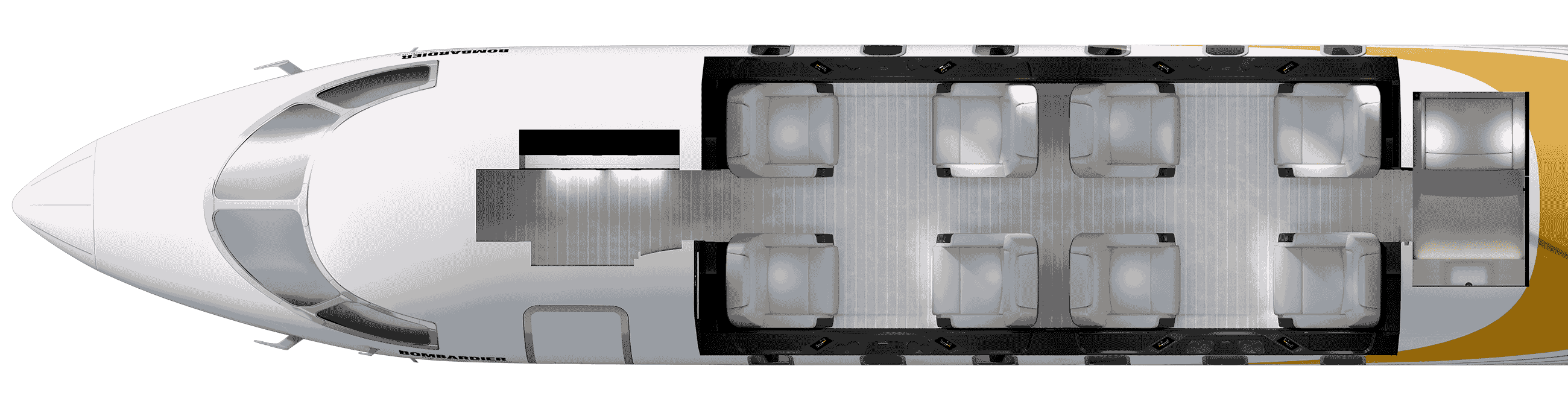
ENTRANCE
- Sound-insulating entry door and cockpit closeout curtains
- Spacious galley with generous work surface, microwave, drainable ice drawer and available sink and faucet
- Wardrobe for passengers’ and crew members’ personal items
- Wood and stone flooring available
- Sound-insulating sliding door separating entrance from main cabin
FURNISHINGS
- Flexible seating arrangements for up to 10 passengers
- Executive seating in club configuration
- 3-place divan with berthing capability available
- Seats feature 180°-swivel, tracking, recline and berthing capability
- Quick-access seat storage compartments
- Concealed tables at each executive seating arrangement
CONNECTIVITY AND ENTERTAINMENT
- Ka-band and 4G ATG internet available
- 22 in (56 cm) high definition forward and aft bulkhead monitors
- Plug-and-play entertainment experience with universal HDMI and USB ports
- Wireless control of cabin environment and entertainment via personal electronic devices
LAVATORY AND STORAGE
- Lavatory featuring large backlit mirror and vanity, sink and faucet
- Unrestricted and safe access to a 106 ft³ (3 m³) baggage compartment
- Wood and stone flooring available

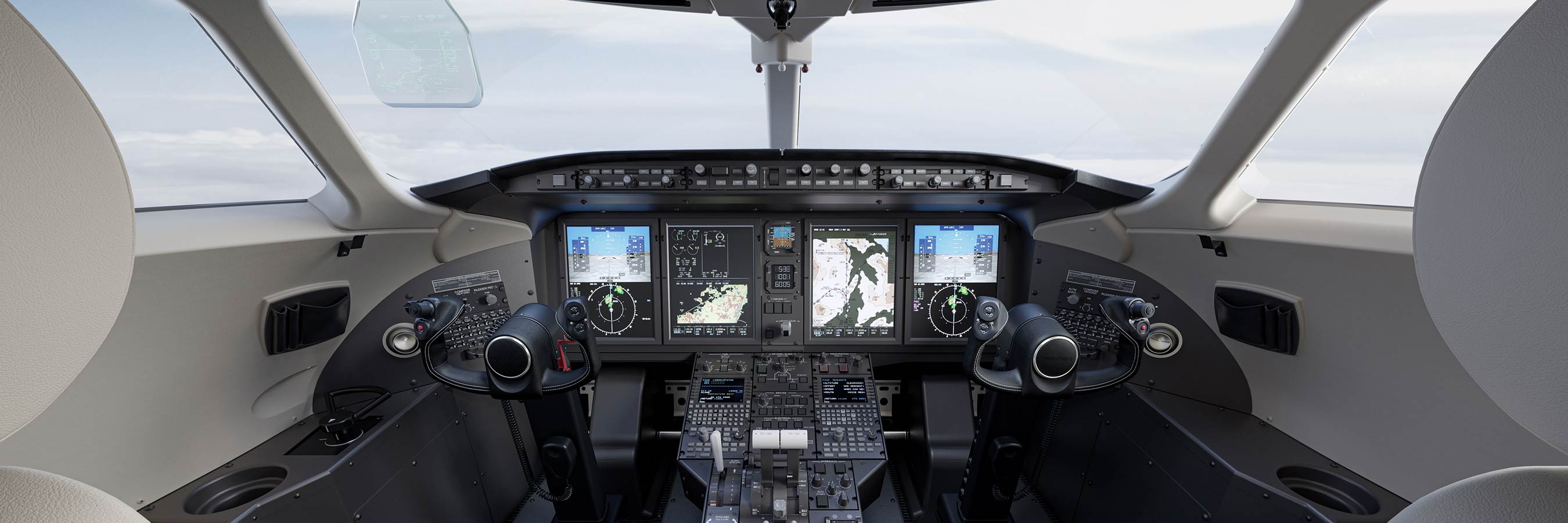
Best equipped cockpit in its class
Fly with confidence. The Challenger 350 aircraft is equipped to meet current and upcoming navigational requirements*** and offers the industry’s most extensive baseline feature set including synthetic vision and MultiScan weather radar systems.


You expect excellence, we deliver exceptional
The Challenger 350 aircraft delivers unmatched versatility – offering the perfect combination of range, speed, field performance and overall value.
The luxury of having it all
The Challenger 350 business jet comes fully-equipped with more baseline features than the competition. While exceptional in its category, these premium enhancements all come standard in the aircraft.
Lowest direct operating costs
The Challenger 350 aircraft has the lowest direct operating cost in its class thanks to affordable maintenance programs and longer maintenance intervals than the competition.
Numbers you can count on
When we say 3,200 nm range, we mean it. Whether it's New York to London, Paris to Dubai or Hong Kong to Mumbai, the Challenger 350 aircraft will get you there with full fuel at full passenger capacity.
Smooth ride
The Challenger 350 aircraft’s wing, engine and landing gear were developed in concert to ensure an optimally balanced design, providing a smooth ride from takeoff to touchdown.

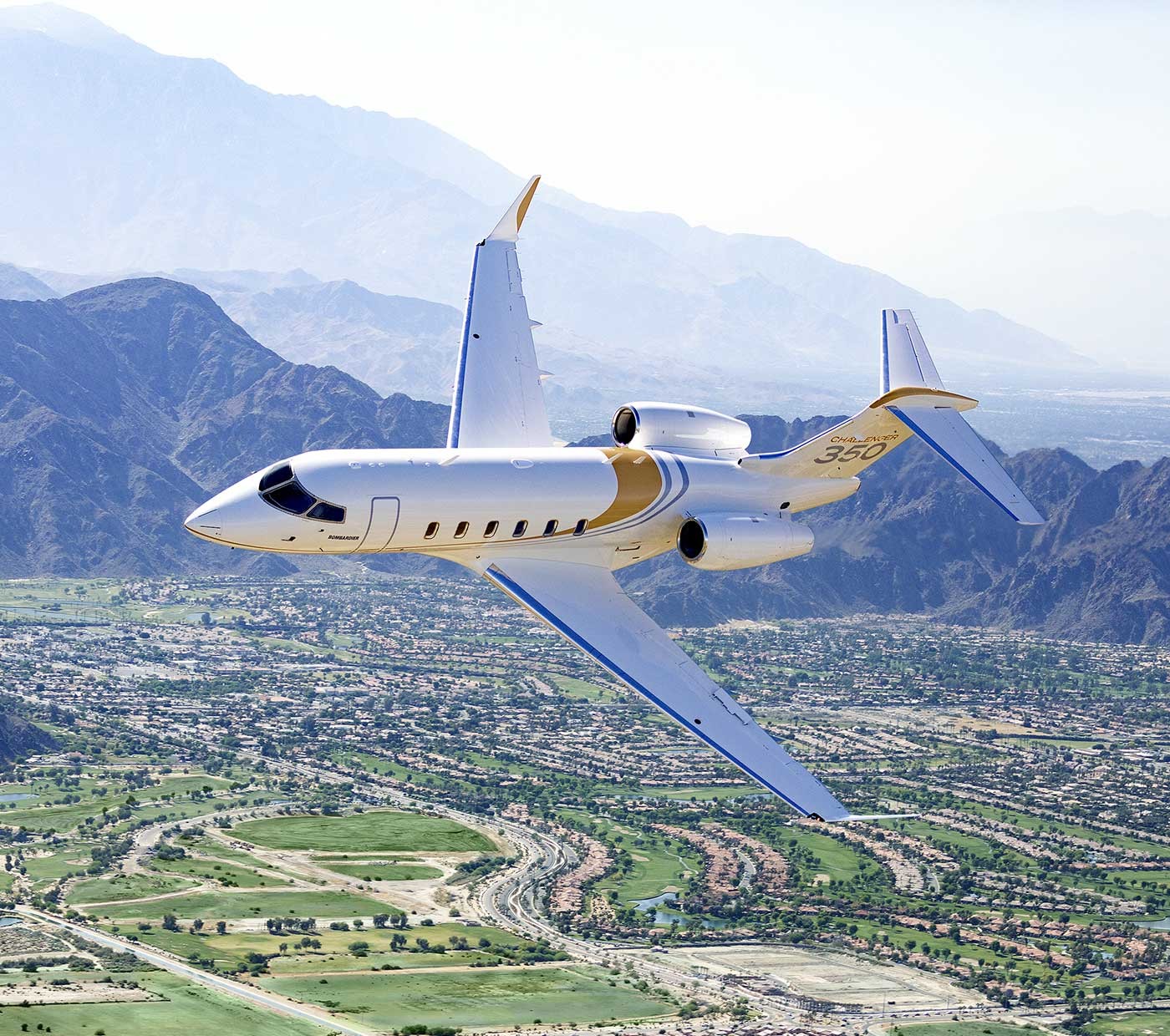
Performance that is nothing short of extraordinary
With its outstanding performance capabilities, exceptional ramp appeal, and leading dispatch reliability, it is no surprise that the Challenger 350 business jet ranks as the #1 aircraft of choice among the top corporate flight departments worldwide.
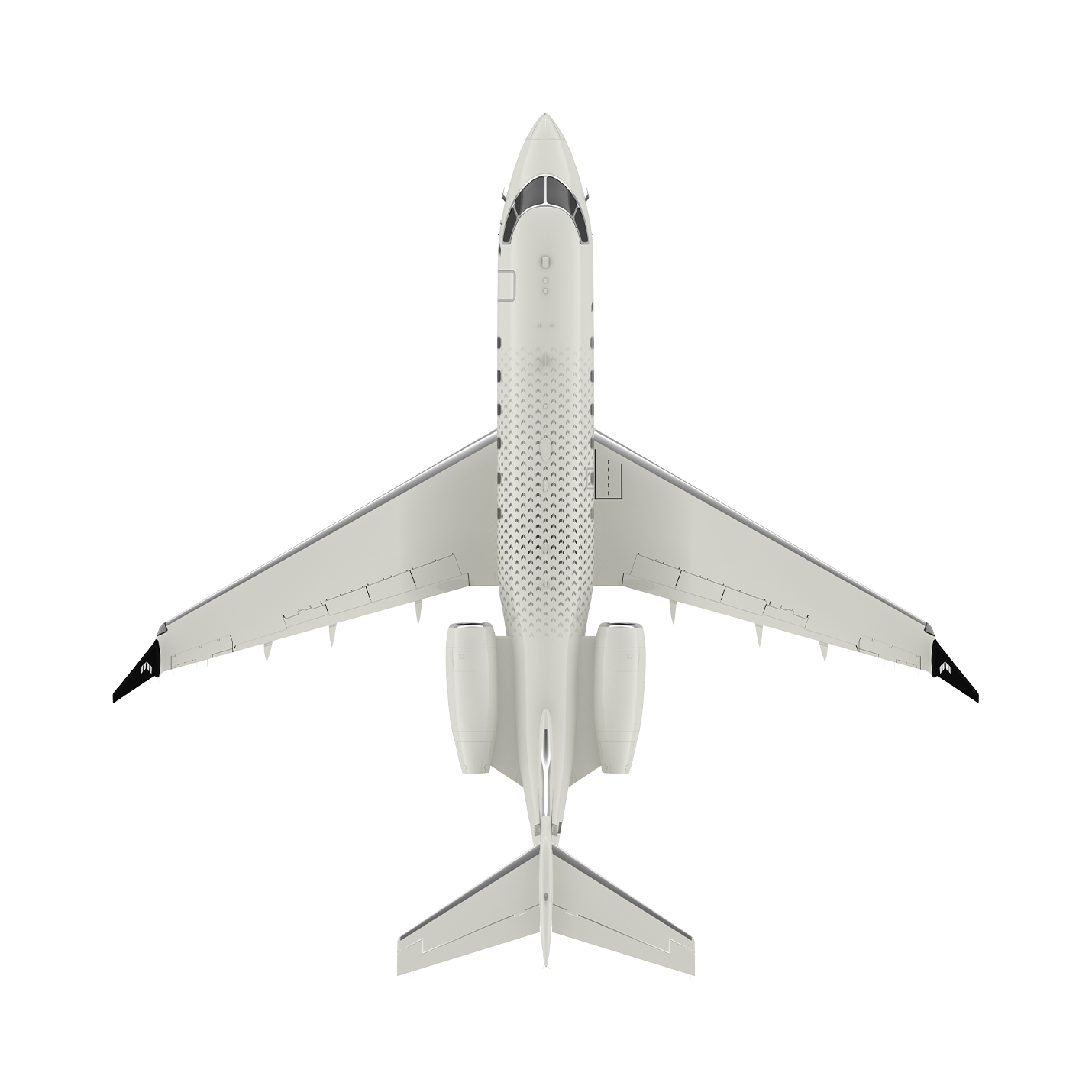

Specifications

Measure:
Range
- Maximum range 3,200 nm 5,926 km
(Theoretical range with NBAA IFR Reserves, ISA, M 0.80, 8 pax /2 crew. Actual range will be affected by speed, weather, selected options and other factors.)
Capacity
- Passengers: Up to 10
Avionics
- Available Head-up Display (HUD) with Enhanced Vision System (EVS)
- Collins Aerospace Pro Line 21TM Advanced avionics suite with four large displays
- Dual Flight Management System with LPV and RNP approach capabilities
- Synthetic Vision System (SVS)
- MultiScan™ weather radar
- Dual Inertial Reference System (IRS)
- Dual SBAS/WAAS GPS
Speed (mach)
- Top speed 0.83
- High-speed cruise 0.82
- Typical cruise speed 0.80
Airfield Performance
- Takeoff distance (SL, ISA, MTOW) 4,835 ft
- Landing distance (SL, ISA, typical) 2,364 ft
Airfield Performance
- Takeoff distance (SL, ISA, MTOW) 1,474 m
- Landing distance (SL, ISA, typical) 721 m
Operating Altitude
- Maximum operating altitude 45,000 ft
- Initial cruise altitude (MTOW) 43,000 ft
Operating Altitude
- Maximum operating altitude 13,716 m
- Initial cruise altitude (MTOW) 13,106 m
Engines
- Honeywell HTF7350 turbofans
- Thrust: 7,323 lbf (33 kN)
- Flat rated to ISA + 15°C


Interior
- Cabin height 6 ft 0 in
- Cabin width 7 ft 2 in
- Cabin length (1) 25 ft 2 in
(1) From cockpit divider to aft most cabin without baggage compartment.
Interior
- Cabin height 1.83 m
- Cabin width 2.19 m
- Cabin length (1) 7.68 m
(1) From cockpit divider to aft most cabin without baggage compartment.
Exterior
- Length 68 ft 8 in
- Wingspan 69 ft 0 in
- Height 20 ft 0 in
Exterior
- Length 20.9 m
- Wingspan 21.0 m
- Height 6.1 m
Weights
- Maximum ramp weight 40,750 lb
- Maximum takeoff weight 40,600 lb
- Maximum landing weight 34,150 lb
- Maximum zero-fuel weight 28,200 lb
- Basic operating weight 24,800 lb
- Maximum fuel weight 14,150 lb
- Maximum payload 3,400 lb
Weights
- Maximum ramp weight 18,484 kg
- Maximum takeoff weight 18,416 kg
- Maximum landing weight 15,490 kg
- Maximum zero-fuel weight 12,791 kg
- Basic operating weight 11,249 kg
- Maximum fuel weight 6,418 kg
- Maximum payload 1,542 kg
All specifications and data are approximate, may change without notice and subject to certain operating rules, assumptions and other conditions. The interior images shown are for information purposes only and may represent some optional configurations. The information contained herein does not constitute an offer, commitment, representation, guarantee or warranty of any kind and the configuration and performance of any aircraft shall be determined in a final purchase agreement. MultiScan is a registered trademark of Collins Aerospace. *Subject to certification. Coverage is currently limited to parts of North America, North Atlantic and Europe.**Subject to certain operating conditions. ***As such requirements are published from time to time by Transport Canada, the FAA or EASA